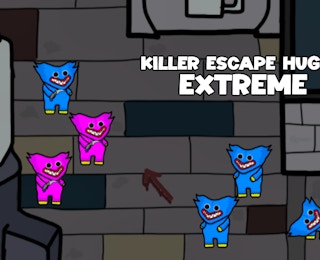
Huggy Wuggy Escape Factory Run is described as having 5+ terror levels, which means the game is structured around multiple survival challenges rather than a single short encounter. The exact level names, maps, and enemy patterns are not provided, so this guide focuses on how to approach each level safely and improve your success rate.
How to approach each terror level
- Observe the opening. Spend the first few seconds learning where Huggy Wuggy or other hazards begin. The opening often defines the safest early route.
- Identify the main pressure direction. Factory escape levels may push you toward exits, corridors, or open areas. Notice which direction forces you to move and plan your path accordingly.
- Find safe positioning. Look for spaces that give you room to react. Avoid corners or narrow sections unless you are confident they lead to a safe route.
- Test one route at a time. If you are unsure, choose a conservative path first. Once you know the level's threat pattern, you can try a more efficient route.
- Repeat failed levels. If a level feels random, replay it. Repeated attempts help you separate real danger from visual noise.
What to expect as difficulty increases
As you move through the 5+ terror levels, expect the game to increase tension through faster pressure, tighter spaces, or more aggressive escape sequences. The available information does not confirm specific mechanics, so do not rely on assumptions from other Huggy Wuggy games. Instead, use each level's actual behavior as your guide.
| Level stage |
Focus |
Recommended mindset |
| Early levels |
Learn basic dodging and safe movement |
Play conservatively and survive first |
| Middle levels |
Recognize repeated threat patterns |
Improve positioning and reaction time |
| Later levels |
Handle increased pressure and tighter routes |
Stay calm and avoid risky shortcuts |
This guide is intentionally general because the game information does not include detailed level data. For quick access to the game, use the play page, and for broader survival advice, see the tips page.
Playing Huggy Wuggy Escape Factory Run is mainly about staying alive while moving through an escape-themed factory environment. The description identifies the game as a dodge-and-survive experience, so the primary objective is to avoid danger and complete or survive the available terror levels.
Core objective
Your goal is to remain alive long enough to pass the level's threat conditions. Because the game is advertised with 5+ terror levels, each level likely presents a new survival challenge. The exact level names and layout details are not provided, so the safest approach is to treat every level as a fresh pattern-learning opportunity.
Basic approach
- Watch the space around you. In a dodge-focused game, threats can appear from multiple directions, so constantly scan the factory area.
- Keep moving with purpose. Random movement can make it harder to react, while steady movement helps you maintain distance from Huggy Wuggy or other hazards.
- Prefer safe paths when available. If a route looks clear, use it before committing to a risky shortcut.
- Do not chase every opportunity. If a path, item, or opening is not clearly described in the game, avoid overextending just to reach it.
- Restart quickly after a failure. Survival games often improve through repeated attempts, so use each run to learn where pressure comes from.
Controls and input
The available information does not list exact input controls. When the game loads, use the movement or interaction method shown in the browser window. The important skill is not a specific button, but your ability to read the level and react quickly.
What to expect
The game is designed for quick online sessions. You should not need to understand a complex story to play; the main skill is reading the environment, reacting to threats, and managing your position. If you are new to Huggy Wuggy-style escape games, start by focusing on survival rather than speed. Once you understand the level's pressure points, you can push for cleaner runs.
For access and browser play, see the play page. For mistake avoidance, see the tips page.