Strategy Guide
For later levels, strategy comes from planning the safest route before moving. The advertised 15+ levels give the game enough variety to reward players who observe patterns instead of rushing.
- Identify the main path and at least one alternate route before starting.
- Wait for toys to move away from critical choke points.
- Keep movement minimal when a toy is close or facing the player.
- Use level boundaries to reset your position after a near miss.
- Focus on one safe segment at a time rather than trying to clear the whole level quickly.
- Use early levels to learn the basic movement rhythm before attempting tighter stages.
A good approach is to divide each level into zones: the starting area, the middle path, and the exit area. Clear each zone separately, and only advance when the next zone has a visible safe window. This reduces the chance of being caught in a corridor or open space with no escape route.
Advanced Tips
Experienced players can improve by treating each level as a timing puzzle. The key is to learn which toys have predictable routes and which require extra caution.
- Memorize the most dangerous toy paths in each level.
- Use the shortest safe route, not necessarily the most direct route.
- Avoid unnecessary movement that could trigger attention or delay progress.
- Practice consistent timing when passing between toys.
- If a level feels random, replay it slowly to identify the actual pattern.
- Use failure as data: note the exact moment the toy became dangerous.
In a game with multiple levels, advanced play is less about reflexes and more about prediction. If you can anticipate where a toy will be one or two seconds ahead, you can move with less risk and finish levels more consistently.
Common Mistakes
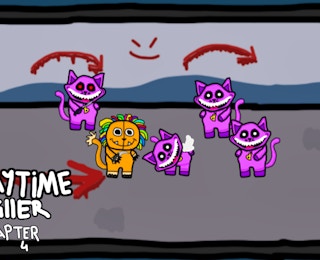
Many failed attempts in a toy-avoidance game come from overconfidence or poor observation. The following mistakes are common in survival stealth gameplay and are especially relevant to Playtime Killer Chapter 4.
- Rushing through a level before checking toy positions.
- Assuming a toy will repeat the same movement forever.
- Standing in open areas when a safer path exists.
- Trying to outmaneuver a toy instead of waiting for a clear window.
- Ignoring the level's exit route and getting trapped near a threat.
- Replaying a failed level without changing the approach.
The best correction is to slow down. In a game where the main threat is toys, a small pause can often be the difference between a safe path and a failed attempt.