









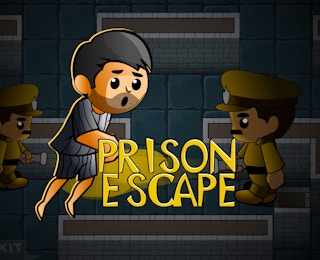
Prison Break: Ultimate Escape Challenge Strategy Guide-Prison Break: Ultimate Escape Challenge
Similar Games

















A strong strategy in Prison Break: Ultimate Escape Challenge is built around information. You need to understand the prison layout, guard behavior, and security systems well enough to choose the safest moment to move. The best players do not simply run toward the exit; they create a sequence of safe moves that gradually carries the prisoner closer to freedom.
Plan the route before moving
Before starting, scan the visible prison area and identify possible paths toward the exit. Mark mental checkpoints: a doorway, a corridor, a gap between guards, or a security-controlled section. A planned route reduces panic and helps you decide when to wait instead of moving.
Read guard patterns
Guards are the main threat, so their movement is the most important information in the game. Watch whether they patrol in loops, pause at corners, face one direction for a period, or change direction after a set time. Once you understand a guard’s rhythm, you can move through their area during the safest window.
Manage security systems
Security systems can turn a safe path into a dangerous one. Treat them like additional guards: observe their active state, affected area, and cycle. If a system blocks a route, look for an alternate path or wait until the risk decreases. Do not force a move through an active security zone unless you have a clear escape option.
Use conservative movement
When uncertain, choose the slower option. Moving slowly through a risky area gives you more time to react if a guard changes direction. If you have a backup route, use it. A successful escape is more valuable than a fast but reckless one.
Adapt when the plan changes
If a guard appears earlier than expected, a security system activates, or your planned path becomes unsafe, stop and reassess. The best strategy is flexible. You may need to wait longer, move backward, or choose a longer route that has fewer immediate threats.
The core mechanics of Prison Break: Ultimate Escape Challenge are based on movement, observation, and timing. The game does not appear to rely on combat in the available information; instead, it creates tension through a guarded prison environment and security systems.
Stealth-like avoidance
Although the game may not use a formal stealth system, the player behaves like a stealth character: avoid detection, use safe positioning, and move only when the risk is low. The prisoner is vulnerable, so exposure is the main danger.
Guard pressure
The presence of many guards creates constant pressure. Each guard can affect a different part of the map, forcing the player to consider multiple threats at once. This is why planning a route is more effective than reacting to a single guard.
Security constraints
Security systems add environmental restrictions. They can make certain paths unsafe at certain times, requiring the player to observe cycles and choose the right moment to pass. These systems increase the puzzle-like nature of the escape.
Timing and spatial awareness
Success depends on knowing where you are, where guards are, and where they are likely to move. Timing your movement with guard positions and security states is the central skill. A player who understands the space can turn a dangerous prison into a series of manageable gaps.
- Memorize guard loops: after a few attempts, learn the repeated routes of important guards so you can predict their positions.
- Use guard turns as windows: the safest moment to cross an exposed area is often when a guard changes direction or moves away.
- Chain small movements: instead of one long dash, move a short distance, pause, reassess, and continue.
- Watch secondary guards: while focusing on one guard, another may be approaching from a different corridor.
- Respect security cycles: if a security system repeats, learn its rhythm and avoid the affected area during its active phase.
- Keep an exit option: before entering a risky section, make sure you have a way to move backward or sideways if the situation changes.
- Choose safety over speed: a longer route with predictable threats is often better than a shortcut through a crowded or security-heavy area.
- Review failed attempts: note exactly where you were caught, then change only one variable, such as timing or route, on the next try.
- Rushing the exit: moving too fast can send you directly into a guard’s path.
- Ignoring nearby guards: a guard that seems far away may become dangerous quickly if you cross their line of movement.
- Standing in open areas: remaining still in an exposed space can make you easier to intercept.
- Choosing a risky shortcut: a shorter path may pass through a heavily guarded or security-controlled area.
- Not adapting: if a route fails, repeating the same movement without changing timing or path will likely fail again.
- Overestimating speed: the game is more about planning and timing than trying to outrun every guard.