









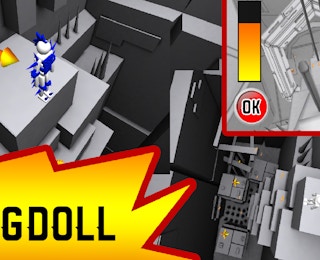
Ragdoll Survival Push Tips-Ragdoll Survival Push
Similar Games











Beginner Tips
- Do not rush the first launch. Spend a few seconds studying the puzzle layout before acting.
- Watch the ragdoll's movement pattern. Ragdoll physics can produce unpredictable tumbles, so note which part of the body leads the motion.
- Use retries as information. A failed attempt is useful if it shows you how a surface, edge, or obstacle reacts.
- Start simple. If a puzzle seems complicated, try the most direct route first before experimenting with unusual angles.
- Pay attention to survival conditions. Since the game is survival-themed, reaching the end is not enough if the ragdoll fails the scenario along the way.
- Keep your first attempts controlled. Gentle tests often reveal more than powerful launches that send the ragdoll off course.
- Learn from repeated failures. If the same problem keeps happening, change your approach instead of retrying the exact same input.
Strategy Guide
Strong strategy in Ragdoll Survival Push comes from treating each puzzle as a physics problem. Rather than repeating the same input, use each attempt to test a variable and build a clearer picture of the solution.
- Identify the win condition first. Ask what final position or survival result the puzzle requires before choosing your launch.
- Break the puzzle into steps. If a direct launch fails, think about whether the ragdoll needs to land, roll, or be redirected first.
- Control momentum. Too much force can send the ragdoll past the target, while too little may leave it stuck.
- Use the environment. Surfaces and obstacles may help guide the ragdoll if you understand how they affect movement.
- Compare attempts. After each try, note what changed and whether the result moved you closer to success.
- Avoid random retries. A planned adjustment is more valuable than many unfocused attempts.
The best players will often slow down and observe the puzzle for a moment before acting. In a physics game, patience is often a strategic advantage.
Common Mistakes
- Launching too hard too soon. Excess force often makes ragdoll movement harder to control.
- Ignoring the survival framing. Some puzzles may require safe completion, not just reaching a point.
- Repeating the same failed action. If an attempt fails, change one element of your approach.
- Overlooking level details. Small layout elements can matter in physics puzzles.
- Treating retries as failure. In physics puzzles, retries are a normal part of discovering the solution.
- Acting before observing. A quick glance may miss the path, obstacle, or landing area that determines success.
- Forgetting to adjust. If the ragdoll consistently fails in the same way, your next attempt should test a different angle, timing, or strength.
Advanced Tips
- Think in chain reactions. Advanced puzzle solving often depends on how one movement creates the next.
- Test edge cases. Try unusual angles or speeds when the obvious route does not work.
- Memorize recurring physics behavior. Once you understand how ragdolls react in common situations, later puzzles become easier to read.
- Optimize after solving. After completing a puzzle, consider whether a cleaner route or more controlled launch exists.
- Use patience as a tool. In physics-based survival puzzles, waiting for the right moment can be as useful as launching quickly.
- Track what you tried. In harder puzzles, remembering which attempts failed and why can save time over many retries.
- Look for indirect solutions. Sometimes the best path is not the most direct launch, but a movement that uses the scene to redirect the ragdoll.