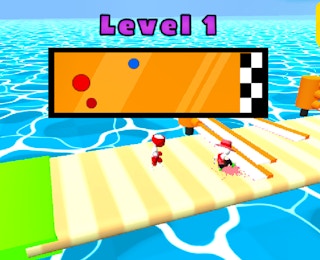
Learn the controls first. Spend a few seconds getting comfortable with steering and dashing before focusing on speed. Familiarity with small corrections is more valuable than trying to rush the course.
Play with awareness, not panic. When you see an obstacle, make one clear decision instead of shaking the controls. A calm dodge is usually safer than a series of frantic inputs.
Keep space around your runner. Staying centered when safe gives you more options for the next hazard and makes recovery easier if you make a small mistake.
Use dash purposefully. Dash is useful for clearing a danger quickly, but it should not replace basic dodging. Save it for moments where it creates a clear advantage.
Expect 25+ obstacles. Treat every part of the course as potentially dangerous and avoid assuming a path is safe just because it looked open earlier.
Review your failures. If you are eliminated, note which obstacle caused the mistake and try to improve that specific reaction on the next run.
Common Mistakes
Reacting too late. Waiting until an obstacle is very close removes time to choose a safe line and often forces a risky dash or overcorrection.
Overcorrecting. A large dodge can push you into another hazard or out of the intended path, especially when the next obstacle is nearby.
Dashing without a plan. Using dash as a panic button can make movement harder to control and may leave you exposed to the next danger.
Ignoring the next obstacle. Clearing one hazard is not enough if your escape path leads into another danger. Always check where you will be after the dodge.
Playing only for speed. In a survival race, staying alive is more important than rushing through a risky section. Controlled movement usually produces longer runs.
Forgetting the 3D perspective. Misjudging distance in a 3D course can make an obstacle seem closer or farther than it is, leading to late or unnecessary corrections.